Why Arizona Heat is Your Tires' Worst Enemy
The scorching Nogales sun isn't just uncomfortable for drivers—it is a silent, continuous threat to your vehicle's safety. When pavement temperatures soar during an intense Arizona summer, your tires undergo extreme thermal stress that can easily lead to catastrophic blowouts if you aren't prepared. Understanding how intense heat affects rubber compounds and internal air pressure is the crucial first step in protecting yourself and your passengers on the highway.
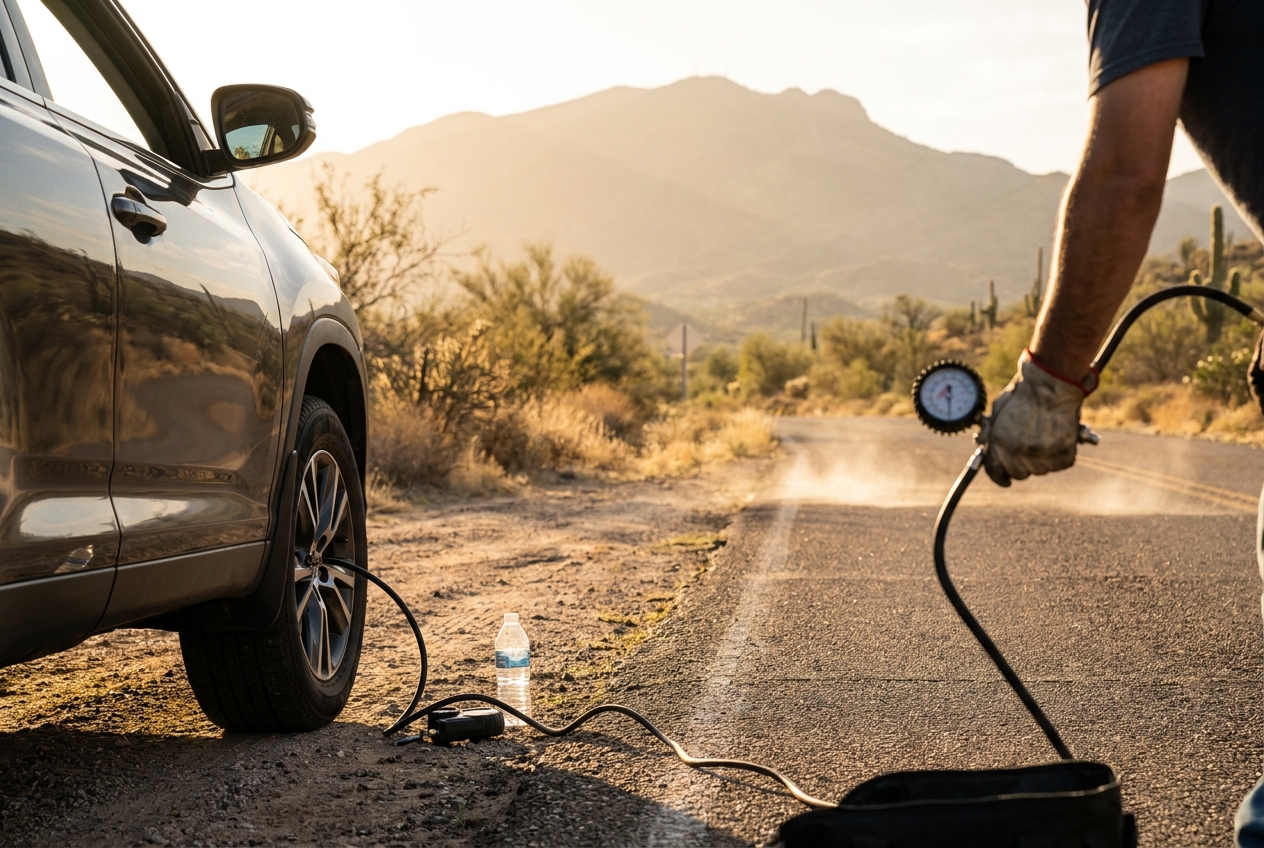
As ambient temperatures rise, the air inside your tires expands rapidly. A good rule of thumb is that for every 10-degree increase in outside temperature, your tire pressure increases by about one PSI (pound per square inch). When you combine triple-digit weather with the natural friction generated by driving at highway speeds, your tires can quickly exceed their maximum pressure threshold. If you are looking for a reliable tire shop near me to inspect your vehicle, it is highly recommended to act before the peak summer heat arrives.
Overinflated tires tend to bulge in the center, causing the middle of the tread to wear out much faster than the outer edges. This uneven wear drastically reduces your traction and creates a dangerous risk of a high-speed blowout. By preparing your vehicle now, you can confidently navigate the harsh summer season without fearing a sudden, dangerous breakdown on the side of the road.
5 Warning Signs Your Tires Can't Handle the Summer Heat
Before the temperature breaks the triple-digit mark, you need to conduct a thorough visual inspection of your vehicle. Ignoring these critical warning signs can lead to dangerous situations. Here are the symptoms you should never ignore:
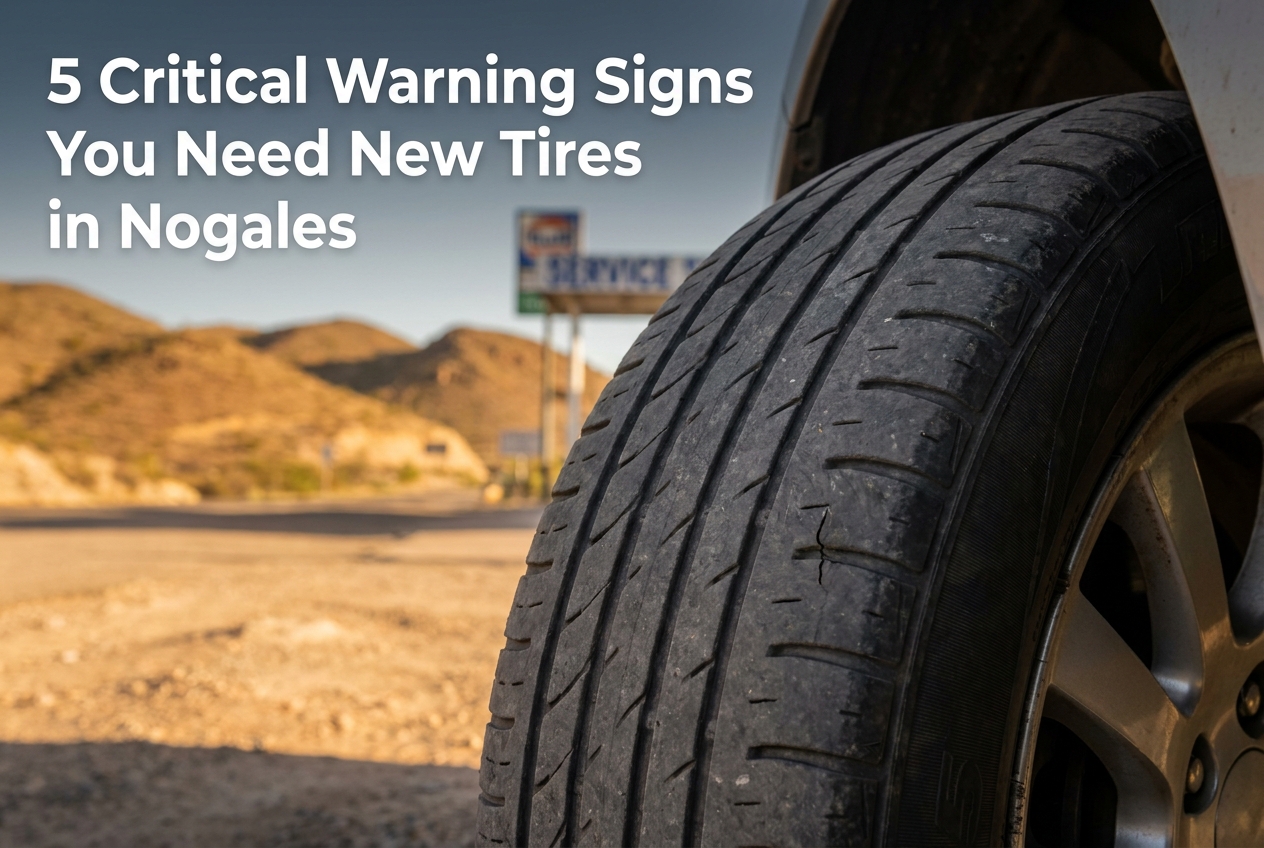
- Bulges and Blisters: Extreme heat severely weakens internal rubber layers. If you notice bubble-like bulges on the sidewall of your tires, the structural integrity is heavily compromised, and you need an immediate replacement.
- Cracked Sidewalls: Dry rot accelerates exponentially in the intense Arizona sun. Tiny, visible cracks along the sidewall indicate that the rubber is drying out and losing its essential flexibility.
- Over-inflation Symptoms: If your daily commute feels excessively harsh and bumpy, or if the center tread is balding significantly faster than the shoulders, your internal pressure is likely much too high for the current weather.
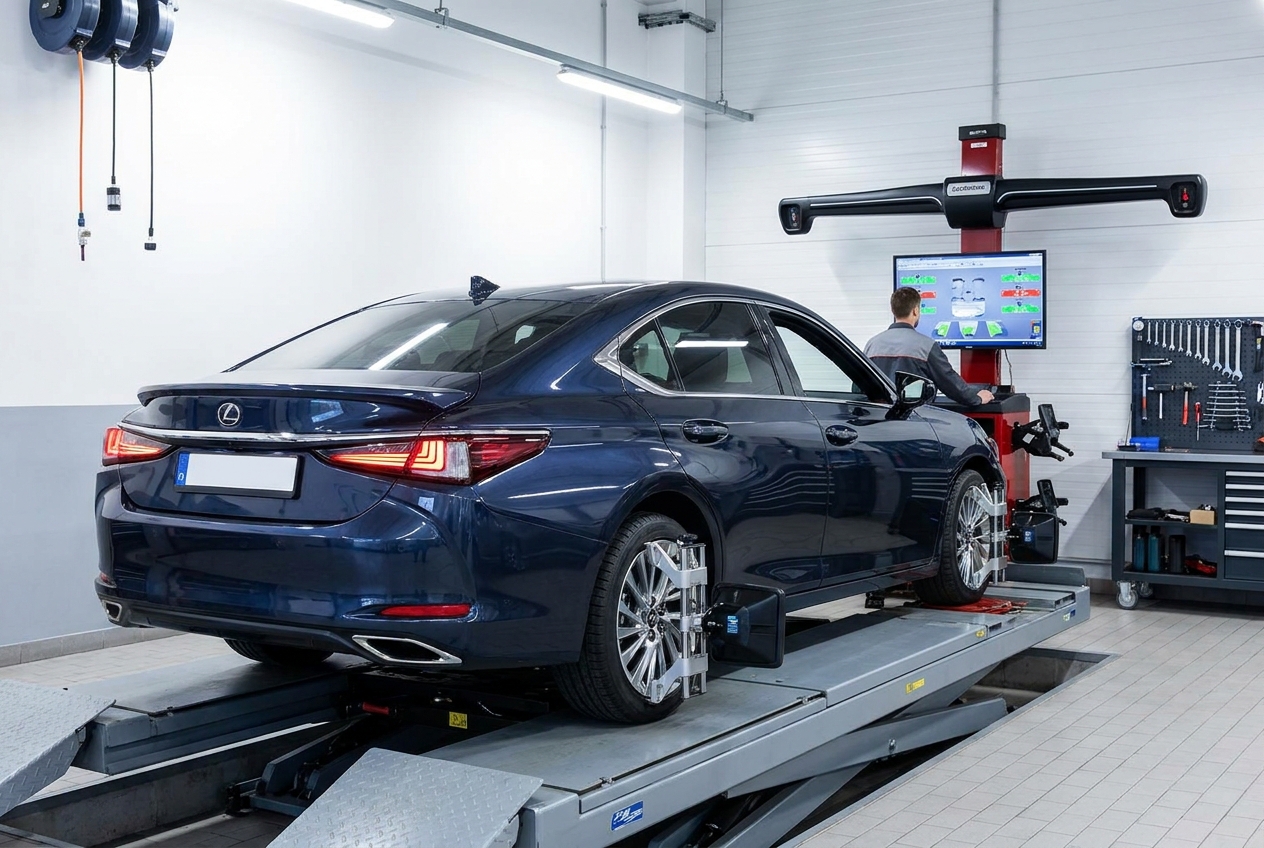
- Vibration at Highway Speeds: If your steering wheel shakes noticeably while driving on I-19, it is a clear indicator of uneven wear or suspension issues. It is time to search for professional tire alignment near me to correct the balance.
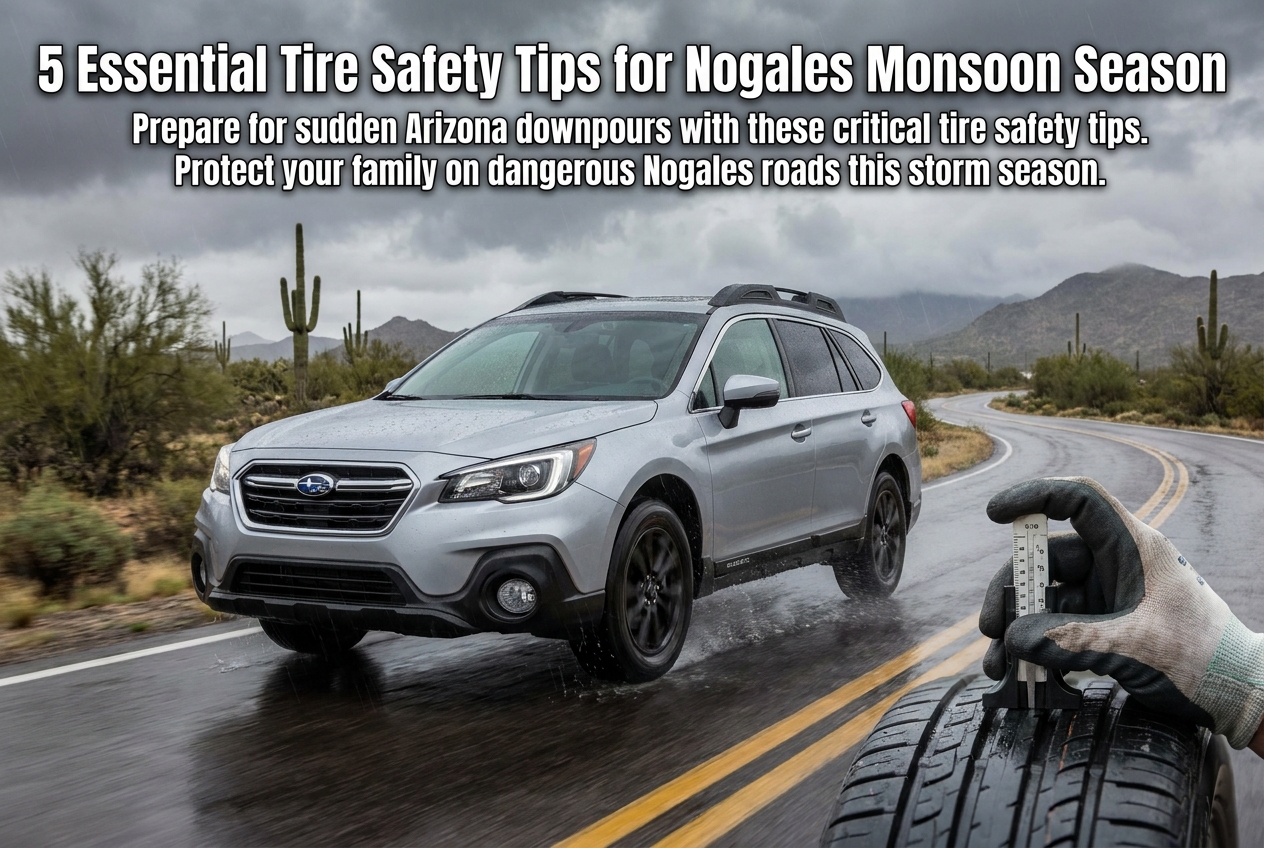
- Shallow Tread Depth: Heat makes slick roads extremely dangerous, especially when sudden summer monsoon rains hit. Use the classic penny test to ensure your tread is deep enough to safely channel standing water away from your vehicle.
How to Prep Your Tires for Extreme Nogales Temperatures
Protecting your automotive investment and ensuring your family's safety takes proactive, consistent maintenance. Whether you are actively browsing for new tires for sale or simply trying to maximize the lifespan of your current set, follow these essential maintenance steps:
- Check pressure when cold: Always measure your PSI first thing in the morning before driving. The intense heat of the day, combined with road friction, will give you an artificially inflated reading, leading to inaccurate adjustments.
- Swap out seasonal rubber: If you recently took a road trip up north and still have your best winter tires installed, remove them immediately. Winter rubber compounds are designed to be soft and will rapidly degrade and shred on hot Nogales pavement.
- Equip the right setup: For year-round Nogales driving, high-quality all-season tires are typically your best bet. They offer a durable rubber compound that withstands high heat while providing adequate traction for sudden rainstorms.
- Schedule routine maintenance: Regular rotations and balancing extend tread life significantly. Any reputable tire shop will recommend rotating your set every 5,000 to 7,000 miles to ensure even wear patterns across all four wheels.
- Inspect your spare tire: Your vehicle's trunk acts like an oven during the summer months. Don't wait until you are stranded on a remote highway to discover your emergency spare is flat, cracked, or severely dry-rotted.
How Proper Summer Tire Maintenance Saves You Money
Replacing blown-out tires on the side of the highway is expensive, highly dangerous, and incredibly stressful. By investing in routine checks and addressing minor automotive issues early, you drastically reduce your long-term vehicle expenses. Consistent monitoring prevents premature, uneven wear, meaning you won't find yourself desperately searching for used tires near me because a sudden blowout destroyed an otherwise perfectly good wheel.
Furthermore, properly inflated and aligned tires maximize your daily fuel efficiency. When your engine isn't fighting against heavy rolling resistance caused by poor alignment or under-inflation, your gas mileage improves, keeping more money in your pocket during those long summer road trips. If you hit a deep pothole or road debris, getting prompt tire repair near me can often save a tire that would otherwise need a complete, costly replacement.
It also pays to be proactive about your purchases. Keep an eye out for seasonal tire deals during the spring and early summer months to ensure you are getting the absolute best value when it is finally time to upgrade your vehicle's footwear.
Navigating Nogales Roads During Monsoon Season
In Southern Arizona, extreme dry heat is predictably followed by sudden, heavy monsoon rains. This dramatic weather shift creates uniquely hazardous driving conditions specifically for Nogales drivers. The oil, dirt, and automotive fluids that bake into the asphalt during dry spells instantly turn local roads into a slippery hazard when that first heavy rain hits.
Your tires are your vehicle's only contact patch with the road. If your tread is severely worn down from the early summer heat, you risk severe hydroplaning and complete loss of control during a July downpour. Having a dependable set of tires with deep, water-evacuating channels is absolutely essential for safely navigating these unpredictable local weather patterns.
Don't let the brutal Arizona sun or sudden monsoon rains compromise your safety this summer. Proper inflation, adequate tread depth, and routine professional inspections are your absolute best defense against heat-related blowouts and hydroplaning.
Need expert advice to ensure your vehicle is completely summer-ready? The ASE-certified technicians at Alex's Tires Inc. are here to help. Stop by our local shop for a thorough free inspection, professional balancing, and personalized recommendations to keep you rolling safely and smoothly all season long.